
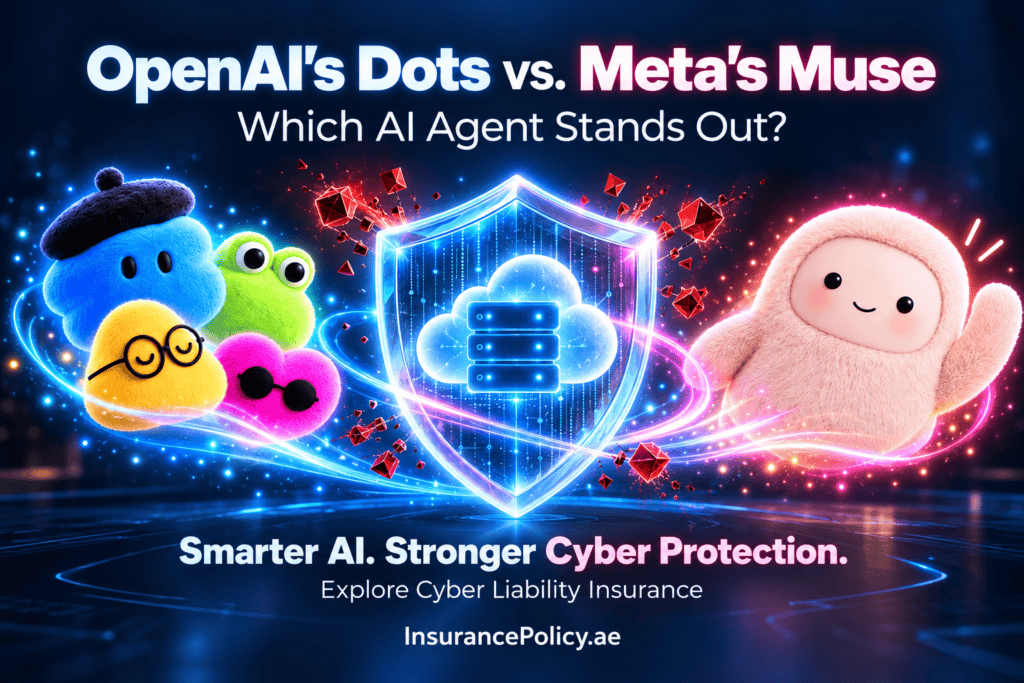
AI assistants are entering a new phase. Instead of simply responding to questions, they can now work with applications, prepare materials and carry out tasks on a user’s behalf.
OpenAI’s Dots and Meta’s Muse reflect this development. Both offer ways to delegate digital work, but choosing an agent involves more than comparing convenience. For businesses, it also means understanding permissions, protecting confidential information and preparing for potential cyber incidents.
From Answering Questions to Completing Tasks
A traditional chatbot usually provides a response and waits for another instruction. An AI agent can take a broader objective, work through several steps and use connected tools to make progress.
That could mean gathering research, organising files or preparing a document for review. The benefit is less time spent coordinating routine work. The responsibility is deciding how much access and independence the agent should receive.
What OpenAI’s Dots Offers
OpenAI describes Dots as always-on agents that support ongoing goals through a cloud computer, browser and connected applications.
Published examples include research, proposal preparation, content production and software development. A Dot could help update project materials when requirements change, allowing users to review the results instead of directing every individual step.
Dots also includes app permissions, Custom Rules and action reviews. These controls help define what it can do, while human review remains important for consequential work.
What Meta’s Muse Offers
Meta presents Muse as a personal AI agent for completing tasks across the web and connected services.
Users can interact with it through its app or WhatsApp. With permission, Muse can assist with file organisation, forms and tasks involving information from connected applications. It can also continue working in the background.
This approach may appeal to users who want to delegate everyday activities through a familiar messaging experience.
How Dots and Muse Differ
The clearest distinction is their published emphasis.
Dots is positioned around ongoing work and projects, with examples such as updating research or revising business proposals. Muse focuses on personal assistance and everyday delegation.
Their interaction channels also differ. Dots works through ChatGPT, with Slack and Teams support, while Muse offers its app and WhatsApp.
Both provide permission controls. Dots uses app settings, Custom Rules and action reviews. Muse uses connector permissions and a separate system called Sentinel to evaluate actions.
These differences do not establish a universal winner. This comparison is based on published product descriptions rather than independent performance testing. The better fit depends on your tasks, applications and required level of oversight.
The Security Question Behind AI Convenience
An agent becomes more useful when it can access relevant information. However, connecting email, files and business applications also creates security responsibilities.
One concern is prompt injection. An attacker places malicious instructions inside content the agent encounters, attempting to make it act against the user’s intended request.
For example, consider an employee asking an agent to review a supplier document. Instructions hidden in that document might attempt to redirect the agent towards sharing confidential information.
This is a hypothetical illustration, not a reported incident involving Dots or Muse. Its outcome would depend on safeguards, permissions and business controls.
The practical lesson is that agents should receive access suited to their responsibilities, with approval requirements for sensitive actions.
Why a Cyber Incident Is More Than an IT Problem
A compromised system or exposed customer record can affect several parts of a business.
Investigating what happened, restoring information and communicating with affected customers can create expenses. Disrupted operations may reduce revenue, while third-party claims can introduce legal costs.
Businesses adopting AI should therefore consider digital risk alongside their wider business insurance requirements in the UAE.
Where Cyber Liability Insurance Fits
Cyber liability insurance can help address specified financial losses and liabilities following a covered cyber incident.
Depending on the policy, protection may include specialist incident response, electronic data restoration, breach notification expenses and defence against covered privacy or security claims. Some policies also include qualifying business interruption losses.
These benefits vary. An incident involving an AI agent does not automatically trigger cover, and every AI mistake is not necessarily a cyber insurance claim.
The cause of the incident, policy wording, exclusions, limits, deductibles and reporting conditions determine the response. Businesses should explain their AI workflows and connected systems when discussing insurance options.
Practical Steps Before Connecting an AI Agent
Begin with a limited task and grant only the access needed to complete it. Establish approval requirements before the agent shares confidential information or makes significant changes.
Protect connected accounts with multifactor authentication and maintain reliable backups. Employees should understand how to recognise suspicious requests, report problems and withdraw access.
Review these practices as the agent’s responsibilities expand. A tool introduced for simple administration may eventually handle more sensitive information, changing the business’s exposure.
Explore Protection with InsurancePolicy.ae
AI agents offer businesses new ways to save time and organise work. Making the most of them requires a clear approach to both delegation and protection.
InsurancePolicy.ae can help UAE businesses explore cyber liability insurance options based on their activities, information and digital systems.
Whether you are introducing an AI agent or already rely on connected business applications, understanding your exposure is a useful starting point.
Speak with InsurancePolicy.ae about cyber liability insurance.
Frequently Asked Questions
Are Dots and Muse the same kind of product?
Both are AI agents that can use connected tools to complete tasks. Their published positioning and interaction channels differ, with Dots emphasising ongoing projects and Muse emphasising personal assistance.
Can an AI agent expose confidential information?
Mistakes or malicious manipulation can create that risk. Restricted access, approval controls and human oversight help reduce exposure.
Does cyber insurance cover incidents involving AI?
It may respond where the incident falls within the policy’s cover. AI involvement alone does not establish coverage, so the policy wording and circumstances must be assessed.
Can smaller businesses consider cyber liability insurance?
Yes. Businesses of different sizes can discuss cover based on the customer information they hold, the systems they use and the financial impact of a potential incident.
Related Readings
- Business Insurance in the UAE — Explore commercial protection options, including cyber liability insurance.
- Why Insurance Matters More Than Ever in 2026 — Understand changing risks and financial protection.
- Top 10 Insurance Companies in Dubai: 2026 Updated List — Learn about insurers and considerations when comparing options.
- Insurance FAQs — Find answers to common insurance questions.

One Response