
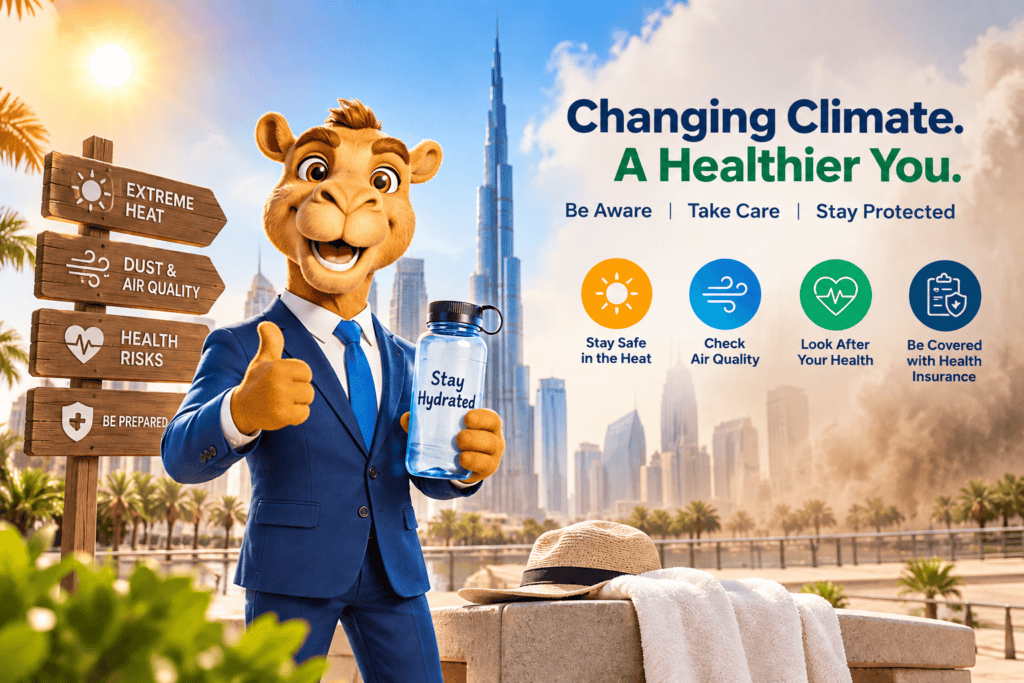
Living in the UAE means enjoying year-round sunshine, modern cities and a high standard of living. But the country’s climate also brings health challenges, particularly during periods of extreme heat, humidity, dust and reduced air quality.
In 2026, heat-related health and workplace safety have remained important topics across the UAE. As temperatures rise and weather patterns change, understanding how the environment can affect our health is becoming increasingly important for residents, families and employers.
So, what are the main climate-related health risks in the UAE, and where does health insurance in the UAE fit into the picture?
Why Heat and Health Are an Important UAE Issue
Extreme heat is more than an uncomfortable summer experience.
According to the World Health Organization (WHO), heat is an important environmental and occupational health hazard. Heat stress can worsen existing conditions, including cardiovascular and respiratory illnesses and diabetes, while severe heat exposure can lead to heat exhaustion or heatstroke.
The WHO also states that exposure to extreme heat is increasing globally as the climate changes.
This is particularly relevant in countries with hot climates such as the UAE, where residents and workers can experience very high temperatures during the summer months.
UAE’s 2026 Heat Stress Prevention Measures
The UAE continues to take measures to reduce heat-related risks, particularly for people working outdoors.
The Ministry of Human Resources and Emiratisation’s 2026 Occupational Heat Stress Prevention Policy prohibited work under direct sunlight and in open-air areas between 12:30 pm and 3:00 pm from 15 June to 15 September 2026, subject to specified exemptions.
Employers were also required to provide measures including suitable shaded rest areas, cooling equipment, sufficient drinking water, hydration supplies and first-aid equipment at worksites.
More than 12,000 rest stations were made available for delivery workers through cooperation between government and private-sector partners during the initiative.
These measures highlight an important point: heat exposure is not simply about comfort. It is also a health and workplace-safety issue.
Dubai’s Dust and Air Quality: Another Health Consideration
Heat isn’t the only environmental factor UAE residents should consider.
Dubai and other parts of the UAE periodically experience dust, haze and reduced visibility.
In September 2026, for example, dusty conditions affected Dubai and Abu Dhabi, with winds contributing to reduced visibility in some areas.
The UAE is also increasing its focus on air-quality monitoring and management through the National Air Quality Agenda 2031.
Dubai residents can access air-quality information through official platforms that monitor pollutants including particulate matter, nitrogen dioxide, sulphur dioxide, carbon monoxide and ground-level ozone.
This means checking the weather forecast may no longer be enough. On dusty days, checking local air-quality information can also be useful, particularly for people who may be more sensitive to poor air conditions.
How Can Extreme Heat Affect Your Health?
The human body naturally tries to regulate its temperature. But prolonged exposure to high temperatures can make this increasingly difficult.
Heat-related conditions can range from relatively mild symptoms to medical emergencies.
Possible warning signs can include:
Heavy sweating
Headache
Dizziness
Weakness or fatigue
Muscle cramps
Nausea
Increased thirst
Confusion or fainting in more serious situations
Heatstroke is a medical emergency and requires urgent medical attention.
Heat can also place additional strain on the heart and kidneys and may worsen certain existing health conditions.
People working outdoors, older adults, young children and people with certain existing medical conditions may need to take additional precautions during periods of extreme heat.
Does Dust Affect Health in Dubai?
Dust is a normal feature of the region’s environment, but periods of increased airborne particles can affect some people’s health.
Fine particles in polluted air can penetrate deep into the respiratory system. Air pollution is associated with respiratory and cardiovascular health risks, according to the WHO.
People with asthma or other respiratory conditions may be particularly sensitive to changes in air quality.
During dusty conditions, residents can consider limiting unnecessary prolonged outdoor exposure, following official weather and air-quality updates and seeking medical advice when experiencing concerning symptoms.
7 Practical Ways to Protect Your Health During UAE Heat
Small precautions can make a meaningful difference.
1. Stay Hydrated
Drink water regularly rather than waiting until you feel extremely thirsty.
People spending extended periods outdoors should pay particular attention to hydration.
2. Avoid Unnecessary Exposure During Peak Heat
Where possible, schedule outdoor exercise, walking and other strenuous activities for cooler periods of the day.
3. Check UAE Weather and Air Quality
Before spending a long period outdoors, check the latest weather conditions.
Dubai residents can also access official air-quality information to understand current environmental conditions.
4. Protect Children From Extreme Heat
Never leave a child inside a parked vehicle, even for a short period.
Vehicle temperatures can rise rapidly and create dangerous conditions.
5. Pay Attention to Warning Signs
Dizziness, unusual weakness, nausea, excessive sweating or confusion should not simply be ignored during extreme heat.
Move to a cooler environment and seek appropriate medical assistance when necessary.
6. Take Extra Care During Outdoor Work
Employers and employees should follow UAE occupational health and safety requirements and appropriate heat-stress precautions.
7. Understand Your Health Insurance
Knowing what your medical insurance covers before you need treatment can save confusion later.
Check your network, benefits, exclusions, emergency-treatment provisions and any applicable co-payment or deductible.
Where Does Health Insurance Fit In?
Climate-related health risks are another reminder of why access to appropriate healthcare matters.
However, health insurance does not prevent heat exhaustion, respiratory problems or other illnesses.
Its role is different.
Depending on the policy’s terms, benefits, exclusions and provider network, health insurance may help provide access to covered healthcare services when medical attention is required.
This is why choosing medical insurance should involve more than looking at the premium alone.
When comparing health insurance in Dubai or the UAE, consider factors such as:
Hospital and clinic network
Outpatient benefits
Inpatient treatment
Emergency treatment
Prescription medicine benefits
Diagnostic tests
Specialist consultations
Chronic and pre-existing condition provisions
Geographic coverage
Co-payments and deductibles
Policy exclusions and limitations
Coverage varies considerably between policies, so always check the actual policy wording and schedule of benefits.
Health Insurance for Families in Dubai
Families may have different healthcare priorities from individuals.
Parents may want to consider access to paediatricians, nearby hospitals and clinics, diagnostic services, prescription medicines and emergency care when comparing plans.
Instead of choosing a policy based only on price, compare the benefits with the healthcare needs of your family.
A lower premium does not necessarily mean a plan is the most suitable option if the provider network or benefits do not match your requirements.
Health Insurance for UAE Employees
Environmental health is also relevant to employers.
Companies operating in construction, logistics, delivery, manufacturing and other sectors involving outdoor activity may have employees who experience greater exposure to heat.
Employers should follow applicable UAE occupational health and safety requirements while also ensuring that employees have appropriate medical insurance in accordance with applicable regulations.
For companies with multiple employees, group health insurance in the UAE can provide medical coverage under a corporate policy.
The benefits, provider network and cost will depend on factors including the number of employees, employee demographics and the level of coverage selected.
Climate, Health and the UAE’s Future
The connection between climate and health is receiving increasing attention internationally.
In the UAE, initiatives addressing heat stress and air quality demonstrate how environmental conditions, public health and workplace safety are increasingly interconnected.
For residents, the practical lesson is straightforward: stay informed, take preventive precautions and understand how to access healthcare when it is needed.
For businesses, protecting employees from environmental risks and maintaining suitable health coverage should form part of a broader approach to employee wellbeing.
Looking for Health Insurance in Dubai or the UAE?
With different insurers, hospital networks and benefit levels available, comparing health insurance can sometimes be confusing.
InsurancePolicy.ae, powered by Platinum Insurance Broker LLC, helps individuals, families and businesses compare health insurance options from UAE insurers.
Whether you are looking for individual health insurance, family medical insurance or group health insurance for employees, comparing benefits — not simply premiums — can help you identify coverage that better matches your requirements.
Compare health insurance options with InsurancePolicy.ae and speak with an insurance advisor about your requirements.
Insurance coverage is subject to the insurer’s terms, conditions, limits, exclusions and underwriting requirements. Health information in this article is provided for general awareness and is not medical advice.
Frequently Asked Questions
Does extreme heat affect health in the UAE?
Yes. Prolonged exposure to extreme heat can contribute to heat exhaustion and heatstroke and may worsen certain existing health conditions. People should follow official UAE health and weather guidance during periods of high temperatures.
What are common symptoms of heat exhaustion?
Symptoms can include excessive sweating, dizziness, headache, weakness, nausea, thirst and muscle cramps. Severe symptoms or suspected heatstroke require urgent medical attention.
Can Dubai’s dust affect respiratory health?
Airborne dust and particulate matter can affect air quality and may aggravate symptoms for some people, particularly those with respiratory conditions. Residents can check official UAE air-quality information and follow medical advice appropriate to their circumstances.
Where can I check Dubai’s air quality?
The UAE provides official air-quality monitoring information through the National Air Quality Platform, which uses data from monitoring stations across the country.
Does health insurance cover heat exhaustion in the UAE?
Coverage depends on the individual insurance policy. Treatment eligibility, provider networks, deductibles, co-payments, exclusions and other conditions vary between insurers and plans. Policyholders should check their schedule of benefits and policy wording or contact their insurer or broker.
How do I choose health insurance in Dubai?
Compare more than the premium. Consider the hospital and clinic network, inpatient and outpatient benefits, medicines, diagnostic tests, emergency treatment, geographic coverage, deductibles, co-payments and exclusions.
Can companies get health insurance for employees in the UAE?
Yes. Businesses can arrange group medical insurance for employees. Available benefits and premiums vary according to factors such as workforce size, employee demographics, coverage level and insurer requirements.
Why should I compare health insurance plans?
Health insurance policies can differ significantly in their networks, benefits, exclusions and costs. Comparing suitable options can help individuals and businesses understand these differences before selecting coverage.
Related reading
You may also find these InsurancePolicy.ae guides useful: